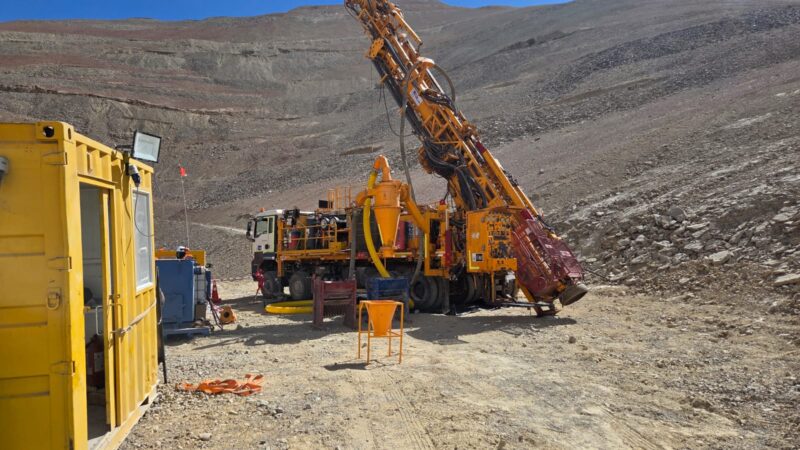
Reverse Circulation (RC) produces a hole size of Ø 140 mm and is generally faster than diamond core drilling, generally producing better samples than rotary air blast (RAB) drilling. Reverse Circulation (RC) is more expensive than RAB and air-core drilling, but less expensive than Core (DD) drilling.
Reverse Circulation (RC) drilling produces rock chips rather than a core sample. The RC method produces sample from depth by pulverizing rock with compressed air and a percussive hammer, returning it to surface through an inner tube, and collecting it through a cyclone into a sample bag.